Tag Archives: Austin City Council

Can The City Council Put The Brakes On Police Pay Raises?

By Bill Oakey – November 28, 2017

Yes.

But that’s not the right question. The question is, do they have the will to do it? At their regular meeting on December 7th, the City Council will face a critical decision that will affect the  General Fund in the annual City Budget for many years to come. This is serious business, and I do not envy the Council members. All 11 of their positions on the dais will become “hot seats” on December 7th.

Staring at affordability projections is really spooky stuff. It’s a lot more comfortable to look the other way. You can kick the can down the road but, by golly, you’ll run headlong into it sooner or later. The other vitally important factor is that we all value the service of our police officers. Austin is one of the safest cities in Texas, if not the country, for its size. So, I would be the last person to suggest that we should short-change them on well-deserved pay.

The fact is that we already have the highest paid police force in Texas. The proposed new contract, approved by the union after negotiations with City staff calls for 9.5% in pay raises over the next five years. With additional stipends included, the total jumps to 12%. The impact on the City’s General Fund was laid out in a public meeting this past May. This was the headline in the Austin Monitor on May 18th: “Mayor Suggests Changes in Public Safety Pay.”

The article starts out with these words:

“Paying for Austin’s public safety needs could add more than $75.9 million to the city’s General Fund budget over the next five years – with more than two-thirds of that funding going to the Austin Police Department, according to the city’s preliminary needs assessment.”

Then, in a later paragraph, this dire warning appears:

“Looking at the projection of public safety needs over the next five years and the city’s projected income, it is clear that even going to the 8 percent rollback rate every year, the City will not be able to meet most of those needs.”

So, public safety salaries could push the General Fund over the edge, and force the City to raise property taxes to the 8% legal maximum every year going forward. And, even if that happens, all of the needed City services covered by the General Fund cannot be met. Fairly simple math will tell you that 8% annual City property tax increases would cause them to double in 9 years and quadruple in 18 years.

During that May City Council Meeting, Mayor Adler suggested that City staff expand their analysis of the public safety costs and other basic needs. And he stated that perhaps some adjustments should be made.

The Big Decision on December 7th Will Not Be Easy

In my current round of affordability meetings with City Council members, one fact has become clear. They cannot predict how the vote on the police contract will turn out. Council Member Ellen Troxclair’s office, often seen as the most conservative, expressed concern over both public safety salaries and the pensions. Council Member Ann Kitchen told me that “It is important to consider all of the cost projections and their implications.”

As an affordability advocate, I have just one piece of advice for each City Council member. Never be afraid to do what you really believe is the right thing. When in doubt about an issue like this, don’t just rely on verbal prowess and the power of persuasion. Sometimes it may be best to remain relatively quiet and…

Just Let the Numbers Do the Talking!

Musical Accompaniment for This Blog Piece:

  1. “Murder By Numbers” – The Police
  2. “One For the Wonder” – Sammy Kaye
  3. “Heartaches By the Number” – Willie Nelson (from 1966)
  4. “Fool Number One” – Brenda Lee
  5. “One” – Three Dog Night

Do What??? $3 Billion in City Bonds Over the Next 5 Years?

By Bill Oakey – November 16, 2017, 7:30 AM

It’s way too early to swallow this. Haven’t even had a sip of coffee yet…

For immediate release:
Nov. 9, 2017
Contact: Aly Van Dyke, Communications and Public Information Office, (512) 974-2969

2018 Bond Task Force seeking public input
The Bond Election Advisory Task Force, established by the Austin City Council in 2016, is seeking public input in advance of offering its recommendations to Council for a bond package to go to voters in 2018.

The Council specifically directed City staff and the Task Force to focus on funding efforts to address flooding, affordable housing, mobility, high-capacity transit, parks, libraries, and existing infrastructure. City departments identified more than $3 billion in needs during the next five years. From that list, City staff developed a $640 million bond package to serve as a starting point for the Task Force to consider.

While the Task Force develops its Council recommendations for the bond package, its 13 appointed members want to better understand what City infrastructure needs are most important to Austin residents.

Toward that end, the Task Force has scheduled seven town halls throughout the city.

6:30 to 8:30 p.m. Monday, Nov. 13, Dove Springs Recreation Center, 5801 Ainez Drive
6:30 to 8:30 p.m. Thursday, Nov. 16, Little Walnut Creek Library, 835 W. Rundberg Lane
6:30 to 8:30 p.m. Tuesday, Nov. 28, University Hills Branch Library, 4721 Loyola Lane
6:30 to 8:30 p.m. Wednesday, Nov. 29, ACC South Campus, 1820 W. Stassney Lane
6:30 to 8:30 p.m. Thursday, Nov. 30, Carver Museum, 1165 Angelina St.
6:30 to 8:30 p.m. Monday, Dec. 4, Spicewood Springs Library, 8637 Spicewood Springs Road
6:30 to 8:30 p.m. Thursday, Dec. 7, Hampton Branch Library at Oak Hill, 5125 Convict Hill Road
Additionally, the Task Force and City staff are working to launch an online survey and a bond simulator by Nov. 15. Residents also will be able to call Austin 3-1-1 to provide their feedback.

The City currently is developing a language access plan to ensure non-English proficient speakers can provide input into this process as well.

More information about the Task Force can be found on the City’s website at https://www.austintexas.gov/content/bond-election-advisory-task-force.

To learn more about the Task Force’s five working groups and their meeting schedules, visit http://www.austintexas.gov/department/city-austin-2018-bond-development.


Let’s Clear The Air On Soccer Stadium / Election Requirement Issue

Follow on Twitter – @AAffordability

By Bill Oakey – November 13, 2017

Above All, This Is an Issue of Transparency

Soccer is a popular sport for people of all ages. Many folks would love to see a major league (MLS) team come here. The last thing we need is another messy, expensive legal battle over whether a stadium on City parkland would require a public vote. Supporters of bringing a soccer team here should embrace an election and rally people to support it. Under the right circumstances, a public-private partnership can be a valuable tool in our affordability arsenal.

In early 2015 I was in the City Council chambers when a local attorney threatened to sue the City if the Decker Lake golf course proposal were not put to a public vote. This followed many months of frustration over why City legal staff insisted that a license agreement with the developer would not trigger an election. Both the Colony Park Neighborhood Association and the Austin American-Statesman endorsed the call for an election. Finally, on April 29, 2015 City Manager Marc Ott reversed course and recommended that the City Council consider putting the proposal on the ballot. Today we should expect the same standard for the proposed soccer stadium.

Let’s Take a Deep Dive Into the Details

My blog posting from last week delves into the history of the City Charter requirement, dating back to 1952. Over the weekend, I finally uncovered the City staff’s reasons for initially not supporting an election on the Decker Lake golf courses. Buried in the digital equivalent of mothballs is this official question and answer document, dated March 5, 2015. Here is a portion of the relevant text:

Council Question and Answer

Related To

Item#28

Meeting Date

March 5, 2015

Additional Answer Information

QUESTION 1: In 2000, voters rejected a ballot proposal to create a golf course at Walter E. Long Park. (The City Charter requires Council to get voter approval before selling, conveying, leasing, mortgaging, or alienating parkland). Please provide specific details about that 2000 ballot measure, including the acreage that would have been allocated for the course and whether that proposal was to sell or to lease the parkland.

ANSWER 1: The ballot proposal in 2000 included a golf course development with a hotel on parkland which required a referendum as the contract was for a lease of the parkland. The hotel would trigger a Chapter 26 due to the change of use of the parkland. The referendum did fail by approximately 49-51%. The approximate acreage is the same being considered today, approximately 735 acres; however, the current contract will be a license agreement for public recreational facility with commercial elements similar to those found on other municipal golf courses (green fees, event space rental, food and beverage, equipment rental, limited retail, etc).

QUESTION 2: Please explain why converting 735 acres of parkland to use as a private golf course does not require voter approval.

ANSWER 2: The proposed development is for a public golf course, not a private golf course as stated in the question. Voter approval is not required because the land will remain open to the public as a park use and will be owned by the City of Austin. The City will not sell, convey, lease, mortgage, or alienate parkland by entering into a license agreement for the finance, design, construction and operation with Decker Lake Golf of a public golf course. The course will be operated by a private contractor similar to other PARD concessions. Supplemental information will be provided to Council from the Law Department as an attorney-client privileged communication.

A Look at the State Code That Protects Public Parkland

Notice that Answer 1 above mentions that the 2000 election for a hotel and golf course was necessary because the project would “trigger a Chapter 26 due to the change of use of the parkland.” That refers to Title 3, Chapter 26 of the Texas Parks and Wildlife Code. For a historical  perspective on the application of this law, check out “Pitfalls In the Use Or Taking of Park Land,” presented to the Texas City Attorneys Association in 2014. Attempting to decipher these will make your eyes glaze over. That’s why we have lawyers. Suffice it to say that both the Austin City Charter and State law aim to protect parkland from unauthorized changes of use.

The Bottom Line – When Does a License Agreement Cross the Line Into “Alienation of Parkland?”

It all comes down to the scale of the enterprise. It appears that only small operations and concessions are permissible. Former City Manager Marc Ott perhaps said it best in his April 29, 2015 memo to the City Council. In it he stated, “While we have a variety of license agreements for the use of parkland, I have to acknowledge that none of them may approach the scale of the one currently in front of you for consideration. With that in mind, giving our residents an opportunity to directly vote to either sell or lease the land may be an equally viable option.” (This quote appears in an Austin American Statesman “Viewpoints” piece, dated June 10, 2015).

Can the Community Come Together On Golf and Soccer Facilities?

Wouldn’t it be nice if everyone could put past disagreements aside, and approach these opportunities with a positive spirit. Perhaps our park system could benefit financially with revenue from a limited number of public-private partnerships. But we need an open and transparent process, followed by a public vote.

One Final Tidbit – ESPN’s Take On an Austin Soccer Team

Last month, the sports network asked some probing questions about whether Austin would be a good fit for an MLS franchise. It’s always fascinating to read what the outside world thinks about major goings-on here in the Capital City. The article is highly recommended.

Musical Accompaniment for This Blog Piece

  1. “One Million Lawyers” – Tom Paxton
  2. “Wouldn’t It Be Nice” – The Beach Boys
  3. “Get Together” – The Youngbloods

Soccer Stadium On City Parkland Would Require Public Vote

By Bill Oakey – November 9, 2017

A resolution at today’s City Council meeting seeks to identify sites, including City parkland, that could be used for a major league soccer stadium. We should hope they are aware that the City Charter requires a public vote before City parkland could be put to such a commercial use.

This topic came up a few years ago when two commercial golf courses were being seriously considered for Walter E. Long Metropolitan Park. A contract was prepared and the City still has a webpage describing that contract. But entering into that contract would have been a clear violation of the Charter, without a public vote. And there is a new golf course proposal in the latest Colony Park master planned community project.

Here is the section of the City Charter that applies:

Article II, Section 7

All powers and authority which are expressly or impliedly conferred on or possessed by the city shall be vested in and exercised by the council; provided, however, that the council shall have no power to, and shall not:

(A) Sell, convey, lease, mortgage, or otherwise alienate any land which is now, or shall hereafter be, dedicated for park purposes, unless:

(1) the qualified voters of the city shall authorize such act by adopting in a general or special election a proposition submitting the question and setting forth the terms and conditions under which such sale, conveyance, lease, mortgage, or other alienation is to be made

The 2015 golf course contract was described as a “license agreement.” Using that language is a lawyer-ly trick to try to get around the Charter. If the term “license agreement” was used to circumvent the prohibition against leases, surely it falls within “otherwise alienate” and would be clearly prohibited under both the letter and the intent of the Charter.

In November 2000, the City did hold a required election to decide whether to put a hotel and golf course at Walter E. Long Park. See the two articles below:

1. Austin Chronicle – March 24, 2000: https://www.austinchronicle.com/news/2000-03-24/76535/

2. 2000 Election Results, Austin Chronicle – November 10, 2000: https://www.austinchronicle.com/news/2000-11-10/79348/

The Charter Provision Dates Back to December 9, 1952

At 10:00 AM on that date, Mayor Bill Drake and the City Council held a meeting and voted to put Proposition 6 on the ballot. The parkland provision was included as Article II, Section 4. (a). In the election on January 31, 1953, it passed by a 61% margin  (Click to enlarge picture).

The history archives show that there was plenty of lively debate throughout the city surrounding this round of charter amendments. It was a complete overhaul. Emma Long, Austin’s first female council member, was a major force behind the charter revisions. Today a huge precedent is at stake.  A new 2018 Charter Review Commission is hard at work planning for an election next year. If you served on that commission, you might get stars in your eyes thinking of your contribution to the City. But what if your efforts got approved by the voters, only to be tossed aside by City officials in the future?  We should respect our legacy and vigorously defend our Charter.

Quick Musical Note:

The number one song on the day of the 1953 election was “Don’t Let the Stars Get In Your Eyes” by Perry Como.

Austin Mayor Bill Drake dressed as Santa Claus – From The Portal to Texas History

Music Community Needs Access To City’s “Secret List”

By Bill Oakey – November 8, 2017

Where is The List? Who has it, and why are they hiding it?

On Wednesday the Austin Monitor reported that the Austin Music Commission is seeking a list of the City’s unused publicly owned properties. The commissioners are looking for help in relocating Austin’s music venues, which have been falling like dominoes in recent years, due to gentrification. Folks in creative arts groups like Music People and the Austin Creative Alliance have been asking for the elusive list since at least 2011. But their repeated requests through City staff at public meetings and other avenues have gone unanswered.

The arts organizations, music venue owners and local musicians are all hoping that their City, which calls itself the “Live Music Capital of the World” will open up some unused public land. They would like access to some of it for music events and other creative arts activities. Austin has an office called the Music and Entertainment Division, which has been trying since this past February to get The List from the Real Estate Services Division. After a recent followup request, the real estate office said that their inventory of City property, does not contain a breakdown of which parcels are unused or idle.

This is another one of those cases where citizens, commission members, City staff and even City Council members have been kept in the dark on access to public information. Since the buck needs to stop somewhere, whaddaya say we try to stop it right here on this blog! I will fill out a public information request. I’ll take it to City Hall and plop it down on the desk in whichever office I am directed to. Then we’ll see what happens.

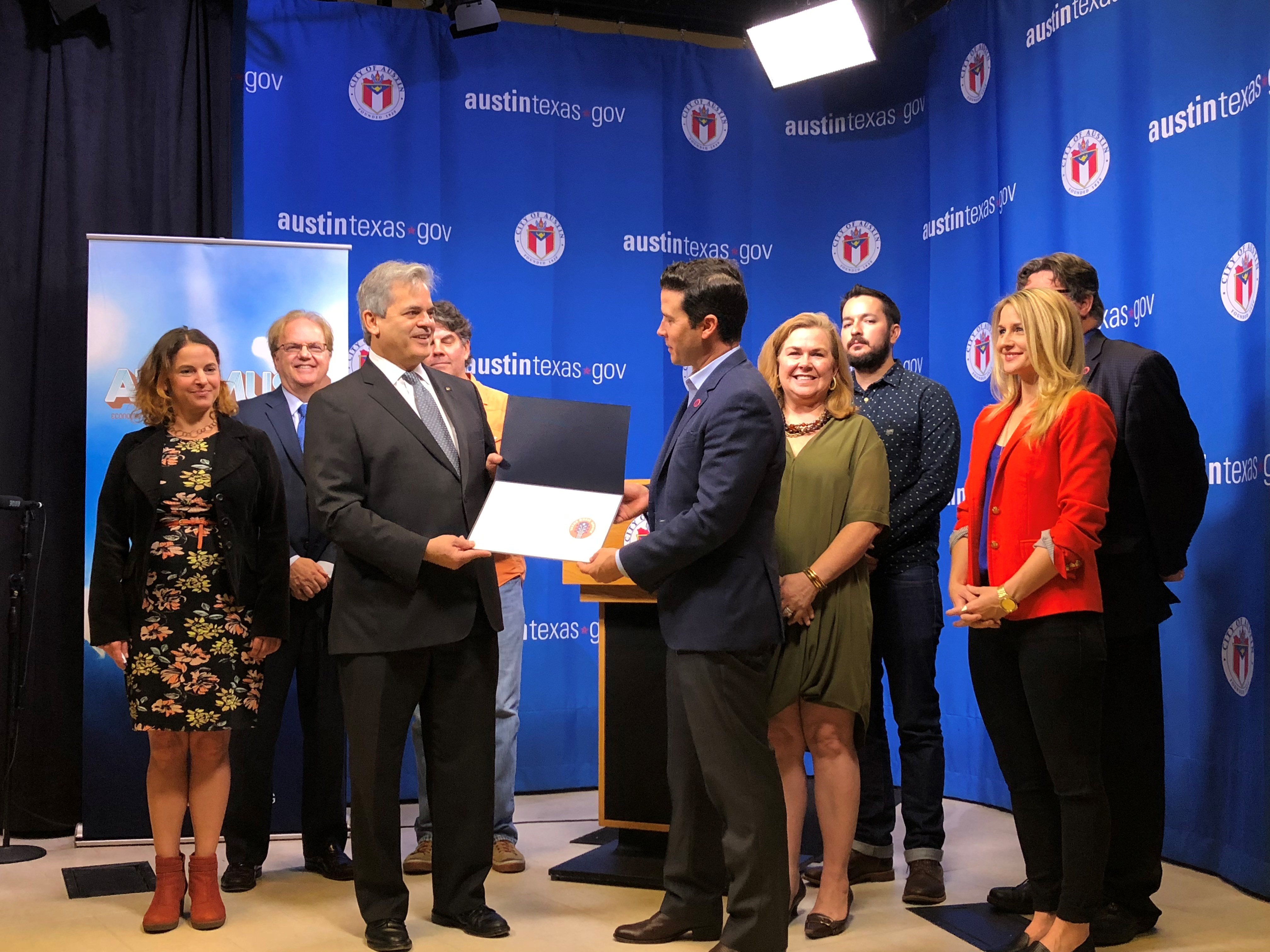
The timing for the unmasking of The List is actually pretty good right now. Just two days ago, the  City’s Economic Development Dept. held a press event announcing that the Governor’s Texas Music Office has designated Austin as an official “Music Friendly City.” Mayor Steve Adler summed up the affordability situation quite eloquently by saying, “The Live Music Capital of the World should be a city where the local music industry thrives and expands, and a city where artists and musicians can afford to live and create. But we’re not going to be the Live Music Capital of the World for much longer if we keep losing musicians and live music venues. That’s the challenge we face, and it’s the challenge we will meet.”

Mayor Adler Receives “Music Friendly City” certificate

If you would like the City to finally compile and release The List, please click here. You can send a single email to all 11 City Council members. If I or anyone else I hear about lands a copy of it, I will be pleased to publish it on this blog.

I moved to Austin in 1971 in large part because of the live music scene. Back in the old days of the mid-1970’s I booked bands into nightclubs part-time. One of them was a western swing band with a funny name called Asleep at the Wheel. I booked their first Austin gig at the Cherry Street Inn on Guadalupe in November 1973 (Now the Clay Pit Restaurant). To experience the best that Austin has to offer these days, check out Sarah Sharp at the Elephant Room at 315 Congress Ave. every Tuesday evening from 6:00 – 8:00.

Musical Accompaniment for This Blog Piece:

“The List” – Album by Rosanne Cash. Classic songs handed down to her by her dad, Johnny Cash

  1. “Miss the Mississippi and You”
  2. “Motherless Children”
  3. “Sea of Heartbreak”
  4. “Take These Chains From My Heart”
  5. “I’m Movin’ On”
  6. “Heartaches By the Number”
  7. “500 Miles”
  8. “Long Black Veil”
  9. “She’s Got You”
  10. “Girl From the North Country”
  11. “Silver Wings”
  12. “Bury Me Under the Weeping Willow”
  13. Rosanne Cash talks about “The List”

County Judge Sarah Eckhardt Steps Forward To “Go Big” On Affordability

By Bill Oakey – November 6, 2017

What a difference a day makes! Last Thursday was like any other day for the last several months. I had begun to wonder what happened to affordability. Nobody at City Hall or Travis County seemed to be talking about it any more. Was it even worth it to keep this blog going?

Then I walked into my Friday morning appointment with County Judge Sarah Eckhardt, who was joined by her chief of staff, Peter Einhorn. I made a really bold suggestion, thinking at the very least that it couldn’t hurt to try. I told her that the numbers are there to prove that we are facing an “affordability perfect storm” And that the only way to stop it would be to launch a major initiative. We would have to go big!

My recommendation is a joint effort by the City and the County, every bit as ambitious as the City’s highly publicized “Year of Mobility” last year.  In my presentation to Judge Eckhardt, I suggested that the issue could be approached on two basic fronts:

  1. Conduct a “Pre-Mortem.” We need to assemble the data to show that we are on a cost spiral that is absolutely unsustainable. Our local taxes, spending and debt are accelerating at a dizzying pace. Because of our dubious distinction as the most economically segregated region in the United States, we need to shift course before it’s too late. A pre-mortem is simply the opposite of a post-modem. Let’s be proactive and solve the problem now, instead of asking what went wrong after the fact. Think of a chart in front of you that shows what your taxes might look like in five years and again in ten years, at the current rate of acceleration. How much debt would our local governments have? How bad would AISD taxes be without any reform of the Robin Hood funding formulas? What would average home appraisals be? What would our median family income look like with our current mix of jobs and wages? I contend that this analysis would show that we are headed for an affordability cliff. Unless steps are taken to turn the situation around.
  2. Now for the next step. A lot of very competent people have studied and spoken about affordability. In the last few years, we have heard many great speeches, attended lots of meetings and forums, and walked away with fancy reports tucked under our arms. But after the presenters turn out the lights and send us home, what happens to those reports? Far too often, nothing much. They languish on shelves like lazy cats…

The challenge to Judge Eckhardt last Friday was to see if she would spearhead an effort to turn those affordability reports and committee proposals into concrete action. With a formalized plan and timeline. I suggested that if she would take the lead, others would follow. The exciting news is that she enthusiastically embraced the challenge. “We will get the reports off the shelves,” she insisted. “There will be rules of engagement that will not only look good, they will do good.” We talked about forging ahead with a can-do spirit. And now she is ready to try to make it happen.

Travis County Judge Sarah Eckhardt

Sarah Eckhardt possesses the tenacity and the smarts to tackle a big project by focusing on the broad objectives, and then drilling down to the finest details. In our meeting, she rattled off several examples of ways to implement cost-saving and efficiency measures. Her approach includes protecting seniors, workforce development, affordable housing and many other areas. She would like to exchange ideas, not only with the City of Austin, but with other cities and counties. And she’s willing to confront the State Legislature about what they need to do to help. Here’s hoping that Austin city officials will come on board and allocate the time and resources necessary to deliver some solid results on affordability. It is time for everyone to wake up and spring into action!


Musical Accompaniment for This Blog Piece

  1. “What a Difference a Day Makes” – Dinah Washington
  2. “A Little Less Conversation” – Elvis Presley (selected by Sarah Eckhardt)
  3. “Where the Action Is” – Freddy Cannon
  4. “Cat’s In the Cradle” – Harry Chapin
  5. “All the Cats Join In” – Teresa Doyle
  6. “Where You Lead” – Carole King
  7. “I Will Follow You” – Ricky Nelson
  8. “Stand and Deliver” – Adam & the Ants

New Central Library Has Highest Parking Fees In Texas

By Bill Oakey – November 3, 2017

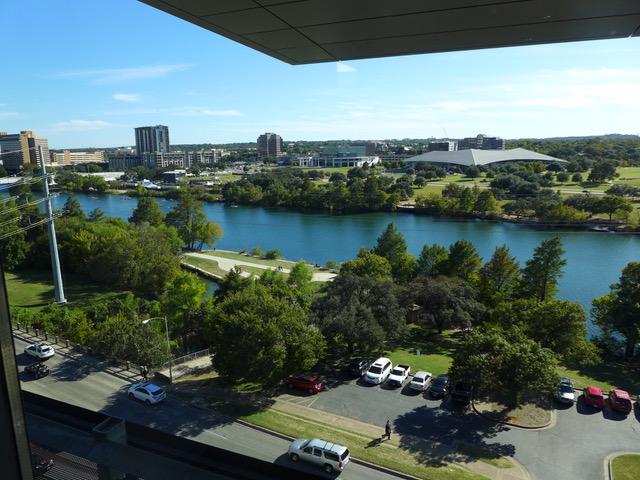
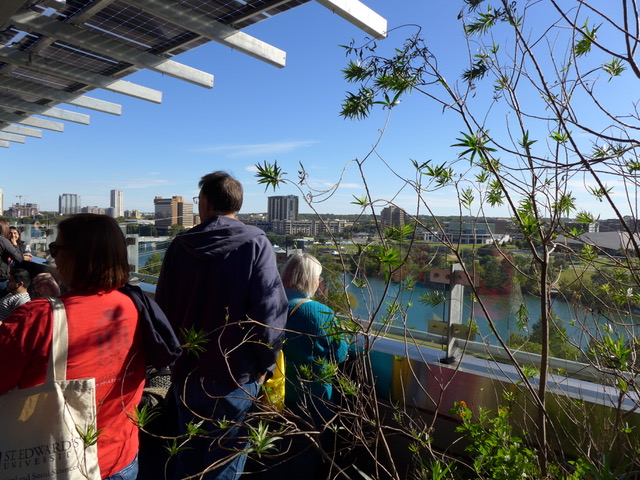
You owe it to yourself to check out the new Central Library. It is a fabulous showcase, so much more than just a library. There is an art gallery, gift shop, restaurant and rooftop garden. Plus several event spaces available for rent. The views from the building are stunning, and the atmosphere is unlike any library you’ve  ever seen in a library.

But there is just one problem…It’s that horribly ugly thing called parking. Fortunately, the first 30 minutes are free. So, it won’t cost you anything to drop off some books or pick up books that you placed on hold. But the clock will be ticking and here’s how the parking fees will add up:

From 31 minute up to an hour – $3.00
Over 1 hour, up to 2 hours = $5.00
Over 2 hours, up to 7 hours = $7.00
Over 7 hours, up to 10 hours = $9.00
The peak is $30.00 for over 12 hours. If you fall asleep for that long, you probably deserve to be charged that much!

How Much Do Other Cities Charge for Central Library Parking?

  1. In San Antonio, parking is free for up to 3 hours.
  2. In Dallas, parking is free for the first 15 minutes, then it’s $.75 per hour for the next two hours.
  3. In Fort Worth, parking is free for 2 1/2 hours.
  4. Houston charges $2.00 per hour, but surely we can do anything better than Houston!
  5. Even Los Angeles only charges $1.00 for the first hour and a flat rate of $1.00 after 3:00 PM on weekdays and all day Saturday and Sunday.

Stay Tuned…

I have been in touch with library officials and several members of the City Council. This battle looks like it might be winnable. Keep your fingers crossed! In the meantime, you should go down there and check out this amazing facility.

Read Kylie McGivern’s KXAN news report on Central Library parking here.

Musical Accompaniment for This Blog Piece:

  1. “My Heart Is An Open Book” – Carl Dobkins, Jr.
  2. “You Can’t Judge a Book By Its Cover” – Bo Diddley
  3. “Book of Love” – The Monotones
  4. “I Could Write a Book” – Peggy Lee
  5. “Fun Fun Fun” – The Beach Boys (rare stereo version)

A New Transportation Vision for Austin

By Bill Oakey, May 4, 2017

Close your eyes and picture yourself driving to work on a crowded Austin roadway. Think about all of the cars that you see around you and every one that goes by.  Then ask yourself one simple question. How many people do you see in each one of those cars?  The answer is just as simple…

ONE!

So, the key to solving Austin’s traffic dilemma is to finally find a way to get more people into fewer vehicles on the daily commute to and from their workplace.  Capital Metro is our only current mass transit provider. Unfortunately, their model is a very outdated and severely limited centralized bus system. Their new 2025 plan is all about continuing this model, and even making mass transit more limited for the people who don’t live near a centralized corridor.

This old-fashioned model works well in a small compact city, with nearly all neighborhoods located close to the center of the city. But Austin has long since outgrown that model with untold numbers of residents living well beyond the narrow boundaries served by Capital Metro. To make matters worse, their consultant-inspired 2025 plan actually eliminates many popular routes used by people who live less than a couple of miles from downtown. One of the bus routes slated for elimination is the #21/22 Exposition bus that serves Tarrytown. The entire neighborhood is in an uproar. We are at the mercy of the Capital Metro board, who probably never even ride their own buses.

So, What Is a Better Solution for Commuter Transit?

My proposal would probably require a big push from both the City of Austin and Travis County to get Capital Metro to implement a new decentralized model that would serve neighborhoods without any current bus routes. The plan calls for a variety of vehicle types to be dispatched to neighborhoods throughout the City and County every weekday. Here are the elements of the proposal:

  1.  Capital Metro should solicit input from medium to large-scale Austin employers to determine which of their workers would like to use the service, and what their addresses are. Then, routes would be determined throughout the greater Austin area, based on where people live and where they work.
  2. Vehicles of different sizes, ranging from cars to vans to buses, would be dispatched to take the commuters to and from work every day.
  3. A team of planners could work out the details on how to set up this new system. Employers could help with some of the cost of the service. And the rates for the passengers could be determined as well.
  4. Capital Metro could still operate a Central City bus system. But pouring every dollar of their available money into expanding that model would only help a small percentage of the people who need mass transit.

Some may ask, what about the light rail option? Realistically, it is probably too late for Austin to build a major rail system. The first $1 billion leg that failed in the 2014 bond election would have doubled our general obligation debt. Taxpayers are not likely to support the $12 billion to $15 or $20 billion cost of a citywide rail system. We missed our chance, unfortunately. It might have been possible if we had started it before 2000.

The sort of comprehensive approach that I suggest would make a major dent in the number of cars on the roads every day during morning evening rush periods. To play devil’s advocate, someone might ask how Capital Metro could employ drivers who only have two pickups per day on these routes. The answer to that question is simple. We live in an age of transportation networking. The large pool of TNC drivers could participate in this new system. They would have to be allowed to drive for this new service, in addition to their work with the TNC’s.

Of course, a system such as this would be a sea change for Capital Metro. It would totally disrupt their current plans and their projected annual budgets. But I strongly believe that we need an innovative approach to solving our transportation problems. We can’t build roads fast enough to accommodate all of the people. And the prevailing push for more and more toll roads is becoming ridiculously expensive, even to think about, much less for anybody to pay for. We have a broken system that needs public support for real improvement. If it turns out that Capital Metro cannot be convinced to embrace the type of change that is needed, then perhaps they should be dissolved, and a new transportation entity should be created to take their place. An early 1900’s model simply will not serve the needs of a growing 21st century city like Austin.


Ellen Troxclair Is First To Stand Up For Affordability

By Bill Oakey – August 21, 2016

With Austinites reeling from another year of double-digit tax appraisal increases and neighborhoods across the city losing longterm residents because of high taxes, this blog has called for City Council action on affordability. In Saturday’s Austin American-Statesman, Council Member Ellen Troxclair became the first to speak up, with an op-ed calling for an official “Year of Affordability.” (This recommendation is Item # 8 on the Affordability Petition to the City Council, posted here on August 11th).

Council Member Troxclair’s willingness to stand up for the taxpayers should be embraced immediately by the rest of the City Council. Although the technically non-partisan Council often splits along obvious party lines, affordability is such a critical issue that it demands attention from all quarters. Kudos to Troxclair for pointing out that the City Budget is growing much faster than our population, and that they have $40 million in new revenue to spend without any tax increase at all. And yet the proposed budget raises them to the legal maximum of 8%.

Remember This – If The City Keeps Raising Taxes 8% Every Year, Your Taxes Will Double In 9 Years!

One of the reasons that the budget is so high is that it includes funding for a wide variety of City plans. As this blog has pointed out several times, there is no coordination or systematic approach to the City’s overall planning process. There are so many plans on the books that no one on the City Staff or the Council would even know where to begin if they were asked to list them all or determine what their total cost might be. And yet, more and more new plans pop up every year, costing millions of dollars to develop and publish. Just close your eyes and try to imagine any private company stumbling blindly into the future without any earthy idea how many plans they have or how much they might cost. The City just plugs the numbers into the budget each year, and crosses their fingers that the taxpayers won’t mind. (See Item # 7 on the Affordability Petition).

Let’s Ask the Entire City Council to Reduce the Budget, Lower the Utility Fees and Live Within Their Means – Just Like You and Your Families Have to Do!

Here is the single-click link to email the entire City Council. Feel free to submit the link to the Affordability Petition from this blog.

Here is Council Member Ellen Troxclair’s Editorial. Let’s hope she can find co-sponsors to make the budget more affordable.

Troxclair: Make this the year of affordability

By Ellen Troxclair – Special to the American-Statesman, August 20, 2016

When voters sent the new 10-1 council to City Hall, they did so with a clear mandate to address the rapidly rising cost of living in Austin in order to slow gentrification, address economic segregation, keep long time Austinites in their homes, and protect seniors — and the rest of us, too — from losing their quality of life. Yet, as we enter our second budget cycle, “affordability” seems to be slipping further and further away.

In these next few weeks leading up to budget adoption, critical decisions about property taxes, utility bills and city programs will be made. This is when the difficult choices are supposed to happen. But the proposed budget takes the easy road at every turn.

It includes an increase to all utility bills and every major fee in the city, and it proposes adopting the maximum tax rate allowable under state law. General Fund spending is increasing a whopping $58 million, and an additional 437 new city employees are being added to the payroll.

To put this in perspective, since 2010, the increase in the adopted tax rate, when compared to the effective tax rate, never rose above 4.4 percent. Last year, that increase was 6.85 percent. This year, we are faced with an 8 percent increase. This occurs despite the fact that Austin already has a higher cumulative property tax bill than all the major cities in Texas when calculated as a percentage of income.

While the individual financial impact will vary, if you live in the median-valued home — which is $278,741 — with the 8 percent homestead exemption, your property taxes, utility bills, and fees will increase an estimated $150 a year. This, of course, does not include the impact from the other taxing entities like Travis County, Austin ISD, Central Health or Austin Community College. If you own a business, or have an older home that is not considered energy efficient, you will likely be faced with an even greater increase.

Some argue that we’re a growing city and we have to keep up. While this may be true, our spending is greatly outpacing our increase in population. The city’s population grew 2.5 percent in 2015, but our spending is increasing a massive 6.7 percent.

The growth is certainly already contributing the city’s coffers. Property tax revenue from new construction is expected to increase by $10.2 million. Sales tax for the city is expected to increase by $8.5 million. Hotel occupancy taxes could rise by $11.2 million. Licensing, permitting, and inspection revenues could increase by $9.1 million. Charges for services other than utilities could increase by $2.4 million. Parking revenue could go up by $900,000. Other taxes, which includes alcohol tax is expected at $1.7 million.

This means that the city is already bringing in well over $40 million in additional revenue this year, and is still going to turn to you for more money.

The city must learn to live within reasonable means, set goals that have measurable outcomes, and scrutinize every program in order to become relentlessly efficient with taxpayer dollars.

In this year alone, I have voted against hundreds of millions in spending, from high priced consultants to vehicle purchases to cost overruns. I did not vote this way because replacing vehicles every three years or hiring consultants aren’t nice things to do. It is because each vote and each purchase ultimately impacts affordability. We must ask ourselves: Is this item a higher priority than financial relief for Austinites?

Beyond that, the city could choose not to add any new positions until the over 1,000 existing vacant — but fully funded — positions are filled. Save the money allocated to these vacant positions as a credit to the next year’s budget. The city could limit the surprisingly large marketing budgets and significant transfers to other departments from Austin Energy, Austin Water, and Austin Resource Recovery.

None of these choices would result in laying off employees or cutting critical services, which is so often the false narrative when confronted with the idea of slowing spending.

Austin residents need a break — and this is the time to take their pleas to heart. We have to end the pattern of consistently increasing spending that has become a crisis for our city. It’s time for action, and it’s time for this budget year to be the Year of Affordability.

Troxclair is a member of the Austin City Council, representing District 8.

Affordability Petition To The City Council – Let’s All Join In!

By Bill Oakey – August 11, 2016

Unless Austinites come together quickly and petition the City Council, the new budget will hit us with the biggest round of property tax, utility and monthly fee increases in several years. The entire concept of affordability has been tossed to the wind by a City Manager and staff that appear to be isolated from the realities facing us. The lofty language in the budget crows about a booming local economy. But it doesn’t mention what’s happening to you and your neighbors – being taxed out of your homes, runaway rent increases, and stagnant wages.

This Petition Needs To Move Quickly. You Can Print It and Distribute It To Your Friends. Or Just Share This Blog Link By Email And Social Media

Affordability Petition to the Austin City Council – August 2016

We call upon the Austin City Council to reject the City Manager’s FIscal Year 2017 Budget recommendation. We respectfully ask you to recognize that affordability is the number one civic issue, and to protect the interests of taxpayers by taking the following actions:

1. Make responsible adjustments to the Budget to reduce the effective tax rate increase from 8% to 4% or less, in line with most City Budgets adopted since 2011. Delay or phase in new programs. purchases and staff positions, rather than sacrificing critical community needs. (Annual increases of 8% would cause property taxes to double in 9 years – even sooner if tax appraisals go up).

2. Place all utility charge and utility bill add-on fee increases on hold. Ask the City Manager to report back to the City Council with a much more affordable fee schedule. (The dollar impact of the utility and fee increases is 2.4 times higher than the property tax increase for a typical resident).

3. Provide senior citizen discounts for all utility bill add-on fees. This is necessary since these fees are growing faster than property taxes.

4. Establish a sliding scale for City employee pay raises. Consider a flat dollar amount or a percentage with a dollar cap. Provide living wages for low-income workers. (2.5% raises over 10 years would increase a $150,000 salary by $37,329. But a $30,000 salary would only increase by $7,466. This would promote economic segregation).

5. Allocate equal City resources to retaining existing Austin residents as for recruiting new businesses. Please consider the AustinAffordability.com ”Homeowner Retention Initiative” as a starting point, along with policies and practices to help renters.

6. Establish a formal timeline to rapidly implement the Mayor’s “Music & Creative Ecosystem Stabilization Recommendations.” We need to protect Austin’s creative Industries and our quality of life.

7. Compile a comprehensive list of all City plans, determine estimated costs for each plan, along with a grand total cost for all of the plans. Publish the list on the City’s website. Seek public input to prioritize the plans and develop an affordable timeline for implementing them.

8. Make an official declaration of 2017 as “The Year of Affordability,” and pursue it as vigorously as you did the 2016 declaration for “The Year of Mobility.”

For more details on how the FY 2017 Budget shuns affordability, read this posting.

How to Get the Petition to the City Council

The fastest way is to use this single-click link to email all of them at once. Just tell them you support the AustinAffordability.com Affordability Petition. Or copy and paste it into your email. If you want to distribute printed copies, those can be mailed to: Austin City Council, P.O Box 1088, Austin, Texas 78767.

Come to the Public Hearings Next Thursday, the 18th

Please invite your friends and come to speak at the City Budget and Tax Rate public hearings. These will be held at 4:00 on Thursday August 18 at City Hall, 301 W. 2nd Street. You can sign up to speak on Item # 82 and Item # 84 at the kiosks in the City Hall lobby beginning next Monday, August 15th.