Tag Archives: Austin Taxes

ALERT – City Budget Shuns Affordability With Record Tax, Utility And Fee Increases

By Bill Oakey – August 4, 2016

Before you even start reading this, get ready to think about what you can do to help. The proposed City Budget is moving like a freight train through City Hall. We don’t have much time to slow it down. What we face is a taxpayer, utility ratepayer and fee payer disaster on two major levels:

1. The budget raises property taxes by 8% above the effective rate, which is the highest allowed under Texas law, without triggering a rollback election.

2. Every utility charge and utility add-on fee is slated for increases – so high that the total dollar impact on the “typical” resident is 2.4 times higher than the record tax increase!

Hang Onto Your Hats for This One Folks – If They Raise Property Taxes 8% Every Year Going Forward, Your Taxes Will Double In 9 Years!

And if your tax appraisals keep going up, they will double a lot sooner. Now let’s take a look at what I found after reviewing the City Budgets adopted since Fiscal Year 2011. In most of those years, the effective property tax rate only increased by about half of the legal maximum of 8%:

Fiscal Year Effective Tax Rate Increase
2011 2.9%
2012 4.2%
2013 4.1%
2014 3.9%
2015 4.4%
2016 6.8%
2017 8.0% (Proposed)

You can review several years of the Austin City Budget here.

How Does the City Staff Rationalize These High Proposed Increases?

In Volume 1, Page 29 of the budget, you will find a cheerful note declaring that a “typical family” would only pay $324 per month for City taxes and fees. They state that this is only 4.8% of the median family income for our region. Well, just look at your utility bills and your property tax bills. Then, sit down with your neighbors and take a look at theirs. Ask each other how many of you would consider yourself “typical,” based on this chart in the Budget. If you live in anything larger than a small condo, your utility bills, fees and taxes are probably much higher.

But here’s the biggest flaw in the argument about City taxes and fees being “only a tiny portion” of your annual income. That doesn’t account for the long parade of other taxes from AISD, Travis County, Central Health and ACC. Of course you could isolate just one taxing entity on your total bill and claim that it isn’t really all that bad. But hey, we have to pay the entire bill! And it’s absurd to suggest that a “typical” family currently pays only $221 per month on their utility bills. The mere suggestion put forth in the City Manager’s proposed Budget that we the citizens don’t have a problem with these costs is outrageous, preposterous and insulting to our collective intelligence!

Please Share This Blog Piece With Your Neighbors, Friends and Co-Workers

Ask them to use this single-click link to email the Mayor and every City Council member. If the City Manager and his staff can’t find a way to make the City departments run more efficiently and more affordably, then it is simply time for them to hit the road!

How Could the City Council Easily Trim the Budget?

Last year I fought hard to convince them to apply cost of living pay increases on a sliding scale. The wealthy managers and executives at the top do not need the same percentage increase as the lowest paid grunt workers. Several City Council members spoke favorably of the idea and even floated various scenarios to make it happen. I pointed out that many times during my 35 year career as a State employee, the Legislature gave us flat dollar amounts as pay raises. This helped the lowest paid workers and held down the skewed impact of percentage increases.  But last year, the City Manager sent a screaming and crying letter to the City Council, complaining that the entire staff had been humiliated by the suggestion of more equitable pay increases. This caused the City Council to fold their tents and abandon the idea immediately.

But Here’s the Crazy Irony In the Situation

Year after year, City officials complain that the State will not allow a flat dollar amount to be used for the City homestead exemption on our property taxes. Every City Council for as long as I can remember has wanted the Legislature to change the law. They have argued correctly that a percentage increase in the homestead exemption favors wealthy homeowners. A 20% exemption on a $1 million home is $200,000. But for a $150,000 home, it is only $30,000.

Well, here’s my question. Why not apply that same logic to across the board pay raises for City Employees? The chart below shows what happens to lower end and higher end employees if they all get a 2.5% pay increase every year for 10 years. Ask yourself if a flat dollar amount would be more equitable. Or at least a sliding scale of some sort on the percentage amount.

City Employee Pay Raises at 2.5% Per Year
Year Low End Salary High End Salary
1 $30,000 $150,000
2 $30,750 $153,750
3 $31,519 $157,594
4 $32,307 $161,534
5 $33,114 $165,572
6 $33,942 $169,711
7 $34,791 $173,954
8 $35,661 $178,303
9 $36,552 $182,760
10 $37,466 $187,329
     
Total Increase $7,466 $37,329

You can see how the rich get richer. For the record, Politifact Texas reported that as of Sept. 1, 2014, 879 City workers earned between $100,089 and $304,657.

Let’s Put a Human Face On Austin Affordability

My friend, Todd Jones, sent me the following email and granted permission for it to be published. I can’t think of anything to add to his comments. Except that I would like for each City Council member to print it and leave it by their bedside between now and the end of the budget cycle.

Bill,

I am over 65 and my property taxes are still around $10k this year even though my AISD portion was frozen when I came ‘of age.’
My home is paid for but my taxes are far more than what I paid each year when I had a mortgage.  I am retired and my pension and social security check did not go up this year.
I just received a utility bill for over $500. for July.  This is the highest bill I have ever received during any summer month since I moved back to Austin from San Antonio in 1983.  We are not lavish when it comes to running our air conditioning.  In fact, we recently bought an expensive high SEER central air conditioner in effort to save money on our electric bill.  Apparently that was for naught given the city’s ridiculous tier system for measuring water and electricity.  We water twice a week to keep our yard from becoming a desert.

We are a man and a wife, both retired finding living in Austin un-affordable.  I suppose we receive some benefit from our taxes we pay but it’s hard to rationalize the amount we pay -vs- the benefits received.  We hope to continue living in Austin because we have a son and a grandson who live here.  However we feel like we have no representation when it comes to affordability.

While we could make a lot of money by selling our home and moving to almost anywhere else…we really would hate to pack up and leave in disgust.

(Feel free to use this letter or a portion as one example of disillusionment with living in a city and county on spending sprees that do not take in to account individuals on a fixed income or people who do not make a lot of money).

Todd

Musical dedication to the City Manager and any other staff members who do not understand affordability and who refuse to accept the notion of pay equity for City employees:

“Hit the Road Jack” – Ray Charles, 1961

Taxpayer Alert – Seniors Would Lose In City / AISD Tax Swap

I’mBy Bill Oakey – April 5, 2016

There would be no “Christmas in July” for Austin seniors this summer if the City moves forward with a new plan to take over funding of many of AISD’s social services. The tax swap idea sounds good to the school district, since they would be able to lower the amount of “Robin Hood” recapture money that they have to send back to the State. But a 1987 State law (which began as a proposal on my old Sears typewriter) freezes school taxes for seniors age 65 and older and the disabled.

The Race Is On

Right now the State of Texas is embroiled in a complex legal case with numerous school districts, including AISD over the Constitutionality of the Robin Hood system of funding Texas Schools. That case still has many miles over rocky roads to travel before probably finally being settled by the State Supreme Court.

Meanwhile the race is on for the City to study, debate and gather public input on the new social services tax swap plan. AISD’s fiscal year begins on July 1st. But there are so many questions. What would happen to the tax swap if the State Supreme Court threw out the current school finance system. Wouldn’t it make more sense to wait until the court battles are finished, and a new statewide tax plan is adopted?

The City Would Need An Offsetting Tax Adjustment to Protect Seniors!

if the City were to implement the tax swap, they would need to adjust their own over-65 homestead exemption for seniors and index it every year to maintain the intent of the 1987 school tax freeze. Everybody needs to contact their City Council members as soon as possible to ensure that this proper step is taken to protect seniors and disabled homeowners.


It’s Time For Taxpayers To Contact The City Council – Watch Out For The Budget!

By Bill Oakey – August 20, 2015

Many thanks to Council Aide, Michael Searle in Council Member Ellen Troxclair’s office. He provided me with a document that shows the current status of proposed cuts and additions to City Manager’s proposed City Budget. Today it is available online. You can read the details by clicking the link below:

City Budget Concept Menu Aug 20

There Is Good News and Bad News

One piece of good news not noted in the chart is that, according to an information request from  Council Member Troxclair, there are no funds budgeted for special event fee waivers. If this position holds, it will be a major victory. It is long past time for the City to pay for special event services from sources other than local taxpayers.

The bad news is the bottom line. This current “budget concept menu” calls for $30.7 million in increases to the General Fund budget, with only $13.4 million in spending reductions. It should be noted, however, that several of the budget change suggestions from Council members have not been quantified yet by City staff. Those items are labeled, “TBD” – To Be Determined. So, in all fairness, the jury is still out on whether this current menu would offer pain relief to taxpayers or serious indigestion.

A Closer Look At Some Of the Highlights

  1. Item 2.13 – Council Member Troxclair recommends freeing up $9.7 million in Budget Stabilization Reserve funds. This would lead to taxpayer savings.
  2. Item 2.14 – Huge Kudos for Troxclair! This item would end three layers of utility subsidies for “economic development” (giveaways for corporate recruitment) to the tune of $11 million. This would lower our utility bills.
  3. Item 2.4 – Thanks to  Mayor Steve Adler. Debt financing of select capital expenses would free up $12.9 million in reserve funds that could lead to tax savings.
  4. Item 2.3 – Thanks to Council Member Don Zimmerman. Implement a sliding scale for City employee pay raises. This would save a total of $7 million. Why should the fat-cats at the top of the scale get continuous big raises every year, while tens of thousands of Austinites struggle with stagnant wages?
  5. Item 2.2 – Thanks to Mayor Steve Adler. He offers an alternative plan for the tiered pay increases that would save $4.7 million.
  6. Item 2.23 – More thanks to Ellen Troxclair. This item calls for a staff pay increase structure that would save $6 million. We need to press the City Council to adopt either the Adler, Zimmerman or Troxclair plan!
  7. Item 3.3 – Thank you, Mayor Pro-Tem Kathie Tovo. Increase Development Services fee to 100% of cost of service. This would save us $1.4 million.
  8. Item 3.6 – Huge thanks to Council Member Sheri Gallo!. Increase Senior Homestead Flat Exemption to levels comparable to 2005 property valuations.
  9. Item 3.13 – Troxclair again! Freeze utility rates and fees to this year’s levels.
  10. Item 2.18 – Still more kudos to Troxclair. Limit additional police positions to 53. The staff’s ambitious increase in police is too much for one big jump in this year’s budget.

Here Is What You Can Do to Help!

This is our big chance to really make a difference in affordability. We need to let every City Council member know that we want meaningful reductions to the budget without being totally swallowed up by budget increases. In other words, tangible relief in taxes, utility rates and fees.

So, please take the time to email the Mayor and all Council members, using this one-click email link. Then, please send emails, texts, Facebook and Twitter postings to as many neighbors and friends as you have on your lists. If we all join together, we can score a nice victory in the new budget. Time is very short, so let’s get the action started now!

A Challenge To The News Media: Monitor The City Council For Budget Affordability

By Bill Oakey – August 13, 2015

The City Council is now knee-deep into their budget deliberations. All of you reading this are wondering about the answers to some critical questions. These are questions that the news media should be asking the Council members, to find out how seriously affordability is being taken into consideration so far:

  1. How many cost-saving proposals have each of the Council members brought up so far in the  Budget Work Sessions?
  2. Which cost-saving proposals have they recommended so far?
  3. How much money has each Council member asked to be cut from the City Manager’s proposed budget?
  4. Has anyone on the City Council suggested an affordability goal for reducing the budget?
  5. Has anyone on the Council suggested a target for reducing taxes or fees in the budget?
  6. Has anyone on the Council suggested reducing the huge increase in staff in the City Manager’s proposed budget?
  7. Has the Council agreed to use a sliding scale for City Staff pay raises, after City employees received two separate raises this year? Or, do they plan to capitulate and offer all employees 3% raises, including executives with lofty salaries at the top?
  8. Have any of the Council members’ proposals for new spending have been offset with corresponding cuts, to ensure a zero impact on each new funding request?
  9. Affordability was often listed as the biggest issue in last year’s City Council campaigns. Has the importance of affordability been front and center so far in the budget deliberations?
  10. Which Council Members appear to be taking the lead on affordability throughout the budget deliberations?

A Few Bad Signs To Be Concerned About

  1. According to a recent article in the Austin Monitor, the City Manager’s budget proposal would RAISE TAXES ALMOST TO THE LEGAL MAXIMUM! That is called the “rollback rate,” which is an 8% increase over the current zero “effective rate.” Specifically, Marc Ott’s proposal would raise the tax rate to 48.14 cents. The legal maximum rollback rate is 48.26 cents.
  2. We would see some relief from the new 6% general homestead exemption. But the bad news is that the proposed budget does not include any specific spending cuts to offset the revenue gap from the homestead exemption. In other words, taxes would need to raised to make up that difference!
  3. Andra Lim with the Austin American-Statesman wrote a City Hall Blog piece entitled, “5 Things We Learned As Austin Officials Started Hammering Out the Budget.” Unfortunately, three of those five items relate to NEW SPENDING that Council members would like to ADD TO THE BUDGET.  While these programs may be worthwhile, and some appear to be, where are the cuts needed to offset these changes?
  4. Earlier this week, I was at City Hall for a meeting with a City Council aide. While walking down the hall, I encountered another aide who delivered some disturbing news. He told me about a trend that has emerged during the budget talks. Every time someone brings up a plan to cut some part of the budget, another Council member has a pet project ready to absorb that new-found money.

There is a simple three-word message that needs to be conveyed to the City Council:

Remember the Taxpayers!

Remember affordability! Remember the map of the City almost totally blanketed with double-digit tax appraisal increases for this year. Most homeowners will face the 10% appraisal cap, and any difference left over above the cap will be pushed into next year. Probably causing yet another back-to-back 10% increase in taxable value.

The Biggest Obstacle That Taxpayers Face is Business As Usual

It doesn’t take long for new City Officials to become absorbed into the status quo. A good word for that is “INERTIA.” Here is Merriam-Webster’s official definition of “inertia”:

: lack of movement or activity especially when movement or activity is wanted or needed

: a feeling of not having the energy or desire that is needed to move, change, etc.

“Business As Usual” was an appropriate title for the groundbreaking album by the Australian rock group, Men at Work, released in 1981. It stayed at number one on the Billboard music chart for 15  weeks and sold 15 million copies worldwide.

But here in Austin in 2015, we can no longer afford Business As Usual at City Hall!

business-as-usual-4f745d7d29bf1

City Council Approves Taxpayer Impact Statement

By Bill Oakey – August 6, 2015

On Thursday the Austin City Council voted unanimously to approve a proposal by this blog to produce a Taxpayer Impact Statement as part of the upcoming City Budget. This marks a major step forward for truth in taxation. When the final budget is adopted, taxpayers will be able to determine the actual dollar amount of any tax increase for a range of home values at various levels of appraised value increases. The Taxpayer Impact Statement, which will be included in the budget document and published online, will also include the estimated dollar increases City in utilities and fees. An amendment to the resolution calls for a set of “budget highlights” to be listed on the statement.

Many thanks go out to Council Member Elken Troxclair, who sponsored this item as a resolution, and to the co-sponsors, Mayor Steve Adler and Council Members Ann Kitchen and Sheri Gallo. And of course we are extremely grateful to the entire Council for their unanimous approval!

The Next Step Is To Ask Travis County to Follow the Example

On Thursday morning I contacted all five of the Travis County Commissioners and asked if they would consider supporting a similar Taxpayer Impact Statement for their upcoming budget. Commissioner Margaret Gomez was the first to respond, and she has gladly agreed to help. The best-case scenario would be universal adoption by all of our local taxing entities. Once all of their budgets are finalized, we should ask for a combined statement of the impact on taxpayers. I believe that good transparency will lead to a better appreciation of our affordability challenges, and hopefully, an eye toward more prudent budgeting.

American-Statesman Editorial Board Endorses This Reform

Here is an excerpt from their editorial:

WE SAY: AUSTIN CITY BUDGET
Tax deliberations need transparency, sensitivity for homeowners
Posted: 12:00 p.m. Thursday, Aug. 6, 2015

By Editorial Board

“City watchdog Bill Oakey, who writes the “Austin Affordability.com” blog, has put together what he calls a ‘Taxpayer Impact Statement’ that spells out much of that data for city taxpayers. That is a good starting point.”

“And, if all five taxing jurisdictions put together such impact statements that also detail the total taxes and fees taxpayers are shelling out annually to those entities, it might generate the kind of sensitivity — and sensibility — needed in budget and tax deliberations. At the very least, such transparency would illuminate how spending decisions by elected and appointed officials affect taxpayers’ wallets from one year to the next. And that would enable voters to hold their elected officials more accountable”


Budget Op-Ed In The Austin American-Statesman

Austin City Budget Needs Affordability Makeover

Wednesday August 5, 2015

By Bill Oakey – Special to the American-Statesman

Every year at this time, Austin homeowners grit their teeth and wonder whether the City Council will remember their skyrocketing tax appraisals as they deliberate on the budget.

This year the tax appraisals were stunning, with double-digit increases as high as 27 percent in some areas. When the newly formed single-member-district City Council asked the city manager to submit a lean budget with responsible cuts, his response was pitifully weak and it suggested closing a fire station. What part of affordability does he not understand?

At the end of July, the city manager issued his official budget recommendation. In Volume One, the word “affordability” appears eight times. But the word “tax” appears 290 times and “fees” 134 times.

Property taxes would go up $40 annually for a “typical” median homestead, with the new 6 percent homestead exemption included. But that “typical” homestead is only valued at $232,272. Many longtime residents in single-family homes haven’t seen tax appraisals that low in about 15 years. Even more disturbing is the onslaught of utility increases and “add-on” fee increases averaging $7.98 per month. For most of the past 40 years, these “add-on” fees were included in our property taxes.

Here are several ideas for cost savings. Each year with our growing economy, we tend to have budget surpluses. The old city council spent nearly all of those in between budget cycles, with little or no public input. A budget is a budget, and any surplus should be used to reduce taxes, unless there is a public safety emergency.

It is long past time for city taxpayers to stop subsidizing for-profit public event companies, like South By Southwest. We could save $4 million every year in the budget with a compromise proposal. City services could be paid from three sources: funds from the Hotel Occupancy Tax, surcharges on ticket sales, and making the event promoters pay some of their own fees.

The council should consider awarding staff pay raises on a sliding scale. The city’s recent across-the-board raises, combined with bonuses and other perks, well exceed the stagnant wages of tens of thousands of other Austinites. Another opportunity for substantial cost savings involves the annual transfer of funds from the Budget Stabilization Reserves. Instead of spending more than $20 million on “wish list” items as the previous council did, the new council should time the purchases of new capital items over several years. Some of the surplus could be used to offset the cost of recent flood-related repairs, thereby cutting the budget and saving money for the taxpayers.

For better transparency, I have proposed a truth-in-taxation plan that includes a “Taxpayer Impact Statement.” This would be a chart that shows tax appraisal values from $100,000 to $1 million, in $50,000 increments. Categories should include the general and over-65 homestead exemptions. There should be columns showing the dollar amount of taxes due and the increase above last year’s amount. Taxpayers should be able to look across the chart and estimate their tax increase, based on various levels of appraisal increases up to the 10 percent appraisal cap. In my discussions of this proposal with both Austin and Travis County officials, some have suggested that the County Tax Office could help by creating a standard format for all taxing jurisdictions.

The city has a flawed policy of cramming the budget process into a few short weeks after the city manager’s recommendation. Travis County begins their budget process in February. The council should consider adopting an earlier schedule for next year. In light of the current tight deadline, they should not accept the city staff’s request to add 347 new positions, compared to only 151 that were added last year. Such a big change should require much more discussion and community input.

The tax-supported general fund has grown 38.9 percent in the last five years. Keeping the budget lean will be necessary if the new City Council wishes to achieve their goal of implementing a full 20 percent homestead exemption over the next few years. This first budget is their opportunity to prove that they are ready to quit talking about affordability and show us some real action.

Oakey is a retired accountant and writes at AustinAffordability.com.


The Whole Truth About The City Manager’s Proposed Budget

By Bill Oakey – July 30, 2015

On Thursday morning the new City Council members were treated to something they have been  eagerly awaiting all summer long – the proposed FY 2016 City Budget. If you would like to get an overview, you can see Volume One right here from the City’s website.

We have all known since the spring that property tax appraisals shot through the roof for most Austin homeowners, to the tune of mid to high double digits in many local zip codes. So, my approach to analyzing the taxpayer impact of the new budget will be different from the spin that appears in the budget’s executive summary. The word “affordability” appears a total of 8 times in Volume One, while the word “tax” appears 290 times, and “fees” appears 134 times. Here is the opening statement on the first page:

“This budget will raise more total property taxes than last year’s budget by $36,413,252 or 7.7%, and of that amount $13,926,299 is tax revenue to be raised from new property added to the tax roll this year.”

It is easy to see from those figures alone that the City intends to spend more money much faster than the growth in new population. Imagine what would happen to the tax impact on long-term residents if that trend continued for the next 10 years. Another disturbing tidbit is that the City Manager proposes adding 347.4 new staff positions, which is more than double the number of 151.25 positions that were added last year. Also, utility and fee increases averaging $7.98 per month are included in the budget.

So, What’s the Bottom Line On This Year’s Proposed Tax Increase?

The fairest and most truthful way to answer that question is to look first at the tax appraisal map from TCAD that was published in the spring when the new appraisals went out. Click to enlarge the map.

Notice this statement that appears next to the map, “The average market value for houses with a homestead exemption in Travis County went up 11% on average to $355,312.” Because the map includes several areas that are outside the City of Austin, it is hard to tell exactly how much the average appraisal increase is for Austin residents. But we can see that almost every Austin section on the map will, on average, hit the 10% tax appraisal cap.

However, the City told the Austin American-Statesman that “The owner of the median-valued homestead worth $232,272 would pay $1,051.08 in city taxes, up from $1,011.24 this past year.” That works out to a very modest-appearing tax increase of only $40. This includes the new 6% homestead exemption approved by the City Council.

What’s Wrong With This Picture?

Here is a comparison between the data in the current FY 2015 Budget (Vol. 1, Page A-16) and the proposed FY 2016 Budget (Vol. 1, Page A-13). But this comparison is not accurate, as you will soon see.

FY 2015 FY 2016 $ Difference % Difference
Median Home Value $202,254 $232,272 $30,018 14.8%
Property Tax $973 $1,051 $78 8.00%

It turns out that the data presented in each of these budgets only allows an “apples to oranges” comparison of the numbers. After conferring with the reporter of Thursday’s article in the American-Statesman, I obtained the missing number needed to derive the $40 tax increase for the “median value” homeowner. The “median value” of $232,272 for a home in the FY 2016 budget is actually the “median homestead value.” They used that value because the City has adopted a 6% homestead exemption. So, in order to calculate the tax increase, we need to know the “median homestead value” for FY 2015. That number, which does not appear in either of the budgets, happens to be $210,279. Thanks to Andra Lim with the Statesman for tracking it down from the City.

With all of the required figures in hand, here is how to calculate the estimated tax increase:

  FY 2015 FY 2016 $ Difference % Difference
Median Homestead Value $210,279 $232,272 $21,993 10.5%
Less 6% Exemption $0 $13,936    
Taxable Value $210,279 $218,336    3.8%
Tax Rate Per $100 0.4809 0.4814    
Property Tax $1,011 $1,051 $40 3.9%

The median homestead value only includes owner-occupied homes, and not the ones being rented. So, there is a vast difference in the variety of residential properties on the tax rolls. A $40 annual tax increase looks small, but the median value numbers above include small units in multi-family properties such as condos. The biggest tax burden is borne by single-family homeowners, who make up a large percentage of Austin’s long-term residents.

We have been told that the City Manager’s budget proposal calls for a tax rate increase from 48.09 cents to 48.14 cents per $100 valuation. But that doesn’t tell us the percentage increase above the “effective rate,” which would take the appraisal increases into consideration.

A Taxpayer Impact Statement Would Be a Good Tool for Truth In Taxation

My “Truth In Taxation” proposal calls for the City to produce a Taxpayer Impact Statement that includes a chart of home appraisal values in $50,000 increments. The chart should include the following information:

1. A column showing last year’s taxable values, with no homestead exemption, plus columns showing the standard homestead exemption and the over-65 and disabled homestead exemption.

2. Additional columns showing this year’s taxable values at various appraisal levels, up to the 10% cap. And the dollar amount of taxes due at each appraisal level.

3. Columns showing the average amounts of utility and fee increases.

4. A final column showing the estimated grand total of tax, utility and fee increases.

It is time for the City to finally bring the full, complete and truthful impact of the budget out of the shadows and into the open!

Page A-11 of the budget spells out the frustrations of the people in the results of a citizen satisfaction survey. Here is just one example:

  • When asked to rate “Overall value for city tax dollars and fees,” 40% of citizens responded that they were satisfied or very satisfied, four percentage points better than the national average. However, 30% of respondents expressed dissatisfaction. Satisfaction is down nine percentage points from previous years, indicating that residents and business owners may increasingly be feeling the pinch of higher tax and utility bills.

A Big Thanks To Council Member Don Zimmerman

By Bill Oakey – June 6, 2015

In the City of Austin, the name Don Zimmerman means different things to different people. Whenever I bring up the name, I get a variety of strange looks and interesting expressions. I suppose there could easily be more than one Don Zimmerman here, since Austin has become a pretty big city. The Don that I know best currently represents District 6 on the Austin City Council. Before he was elected last November, he earned a reputation as a fighter for the taxpayers, even occasionally taking his battles to court.

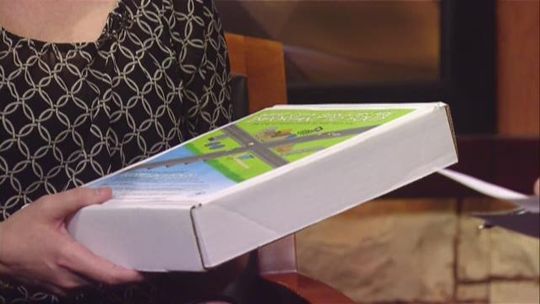
When I walked into his office at City Hall recently, I came prepared with documents and notes to support my affordability proposals for the upcoming City Budget. We did not discuss party politics. It was a straightforward dialog about longstanding problems with the budget. The most amusing thing he showed me is the City’s latest “Budget in a Box.” It actually does come delivered in a box. This cleverly marketed product could be easily mistaken for some kind of X-Series video game console kit, complete with hardware and software manuals and a DVD. It looks colorful and exciting from the outside:

Budget box

City of Austin Budget In a Box

But to put it mildly, Don Zimmerman was not impressed. The first thing he showed me came as no surprise, but it ticked me off nonetheless. Get ready for this everybody…we should have known it was coming. The wonderful news from the Budget In a Box is that the City is forecasting a slight decrease in the property tax rate!  Yes, once again we are not being told the Truth-In-Taxation percentage of the estimated tax increase. That is why the first item on my reform list has always been Truth In Taxation. Because of the high property tax appraisals this year, the tax rate could go down slightly and we would still see a pretty stiff tax increase, especially those people whose appraisals have hit the 10% cap. The truthful amount of the City’s tax increase would be stated as the increase above the “effective rate.” That is the amount that would generate the same amount of revenue as the City received last year. By law, they can raise the effective tax rate by as much as 8% without triggering a rollback election by citizen petition. Last year’s tax rate changed by only a fraction of a penny, but the increase above the effective rate was 3.8%.

Meanwhile, back in Don Zimmerman’s office, we looked at the chart on Page 57 of the Five Year Financial Forecast. I will not attach an audio recording of the words that may have slipped out when we saw the huge chart of tax, utility and utility add-on fee increases. You can read it yourself right here. For a “median-value home” of $221,086 the bottom line projected increase is $18.53 per month. The tax portion of that is only $7.05. But here’s the problem. The estimated tax amount does not include any new programs or changes made by the staff or the City Council. And the chart does not take into consideration whether your home saw a double digit tax appraisal increase. So, the tax increase that you would actually see on your bill would most likely be considerably higher. And, by the way, how many people do you know who live in a “median-value home” that is appraised that low?

To summarize my meeting with Mr. Zimmerman, he told me that he supports my affordability proposals. And he mentioned one of his own that I will explain in detail in another posting. We all have a big hill to climb between now and the end of the budget season. It will not be a stroll on the beach, like the Beach Boys portrayed in their 1974 album, Endless Summer.

As for Don Zimmerman, some of you may have him confused with that other guy out there that some people think is “way out there.” The one that brings to mind flying saucers, conspiracy theories, and tables levitating to the sound of voices from the dead. That is not the Don Zimmerman that I talked to down at City Hall. But, I don’t want you to leave this blog disappointed if you came here looking for a pathway to adventures from another world. Just grab a beer or a glass of something else and check out this video.

Special Event Fee Waivers – Other Texas Cities Prefer Hotel Occupancy Tax

By Bill Oakey – June 4, 2015

The quest to eliminate taxpayer-subsidized special event fee waivers may get a boost, thanks to the discovery of a little-publicized City Manager’s Power Point presentation from mid-2014. This presentation followed the May 1st passage of City Council Resolution # 20140501-036, sponsored by Kathie Tovo, directing the City Manager to review alternative funding sources for special event fee waivers. One specified option was to consider using the Hotel Occupancy Tax. A subsequent information request from then Mayor Pro-Tem Sheryl Cole revealed that Austin’s Hotel Occupancy Tax revenues have galloped from $51 million in 2012 to an estimated $70+ million in 2014.

The newly discovered Power Point presentation should put to rest any fleeting suggestion that Austin cannot or should not use Hotel Occupancy Tax funds to replace millions of dollars in fee waivers. This statement appears on Slide # 17: “To date we have researched and found 30 cities in Texas that currently utilize other funding sources for special events that qualify; most utilizing a percentage of HOT Funds administered by the Convention & Visitors Bureau (CVB).” Cities cited in the presentation include Cedar Park, Dallas, Georgetown, Giddings, Fredericksburg and Round Rock. You can download the Power Point presentation here.

From an affordability standpoint, here’s a revelation that should catch everyone’s attention. On Slide # 8, charts show that in 2013 the City granted $1,146,127 in fee waivers. But somehow they wound up with a funding gap of $3,110,104 that year. The event costs for all City departments added up to $6,703,457, while fees collected only came to $3,593,353. (The City Transportation Dept. reported the 2013 funding gap to be $4,256,000, with the total five-year deficit from 2009-2013 coming to $10,694,000).

At the City Manager’s Power Point session, Slide # 2 states that an alternate funding proposal for special events was due to his office on July 24th, and to the City Council on August 7th (the date specified in the Council resolution). We now know that something transpired at City Hall between May and November of 2014. Marc Ott’s November 7th memo signaled a new direction for responding to the issue, as well as a new one-year-later deadline. They are now pursuing a plan for multi-year agreements with special event organizers. These carry the potential for locking in the taxpayers to continuous fee waiver subsidies. The whole notion of considering the Hotel Occupancy Tax as an alternate funding source disappeared down the rabbit hole.

But now it is on its way back out…Stay tuned!

Rabbit Hole

Dancing To The Taxpayer Blues

By Bill Oakey – May 29, 2015

A long tall Texan got into his pickup truck and switched on the radio. He listened to the following commentary from a country music deejay down in Austin.

Now folks, I don’t get into politics on this show, but I heard about something the City Council said that I think you should know about. They were talking about an unlevel playing field for property taxes.  Something about the system that isn’t quite right.

Maybe they have a point.  Have you ever sat down in a Texas dance hall and tried to hold onto a beer when the table wasn’t level? Worse case scenario, you would spill some of that beer on your best friend’s wife, right after you danced to “The Last Cheater’s Waltz.” I think we need the City to level our taxes.

I have a nutty friend who spends a lot of time reading City financial reports. Darned if he didn’t tell me that the City Manager is promising once again to “hold the line on the tax rate.” Man, they’ve been pulling the wool over our eyes every year on that stuff. Willie Nelson, Norah Jones and Wynton Marsalis nailed it with the song, “Here We Go Again.” Isn’t there supposed to be some kind of truth in taxation?

The high taxes have priced people so far out into the suburbs that it’s a wonder more of them don’t fall Asleep at the Wheel while sitting in traffic. I can see why the character in George Strait’s song, “All My Ex’s Live in Texas” now hangs his hat in Tennessee. He couldn’t afford his Austin taxes.

And it keeps getting worse. The end of year tax deadline is not a whole lot of fun. In 1974, Merle Haggard released a sad but hopeful tune called, “If We Make It Through December.” He must have known what was coming down the pike in Austin.

All right folks, it’s time for me to get off my soapbox and get back to some more hit music. Here’s one I think you’ll enjoy called, “When I’m Under the Table, I’ll Be Over You.”

hat